
Anúncios
Working from home doesn’t mean sacrificing your connection to the natural world. Biophilic design brings outdoor elements inside, transforming sterile remote workspaces into vibrant, health-promoting environments.
🌿 Understanding Biophilic Design in Remote Work Environments
Biophilic design represents more than just adding a potted plant to your desk. This innovative approach to workspace design acknowledges our innate biological connection to nature and leverages it to create environments that support human health, productivity, and well-being. The term “biophilia” literally means “love of life,” and when applied to remote workspace design, it becomes a powerful tool for combating the isolation and disconnection many remote workers experience.
Anúncios
Research consistently demonstrates that incorporating natural elements into indoor spaces reduces stress hormones, lowers blood pressure, and improves cognitive function. For remote workers spending eight or more hours daily in home offices, these benefits aren’t luxuries—they’re necessities for sustainable productivity and mental health.
The principles of biophilic design extend beyond simple aesthetics. They encompass direct experiences with nature (plants, water, natural light), indirect experiences (natural materials, colors, patterns), and spatial configurations that mimic natural environments. When thoughtfully implemented, these elements work synergistically to create workspaces that feel inherently restorative rather than draining.
Anúncios
The Science Behind Nature’s Impact on Productivity
Numerous studies validate what many intuitively understand: nature makes us feel better and work smarter. A landmark study by the University of Exeter found that employees working in environments with natural elements were 15% more productive than those in sparse, minimalist spaces. This productivity boost isn’t coincidental—it’s rooted in how our brains evolved.
Our ancestors spent millennia in natural environments, developing neurological pathways that respond positively to natural stimuli. Modern office environments, with their artificial lighting, synthetic materials, and geometric precision, actually require our brains to work harder to process sensory information. This cognitive load, though subtle, accumulates throughout the workday, contributing to mental fatigue.
Natural elements trigger what researchers call “soft fascination”—a state where our attention is gently engaged without requiring intense focus. This allows the prefrontal cortex, responsible for complex decision-making and creative thinking, to rest and recharge even while we remain alert. The result is sustained concentration, reduced mental fatigue, and enhanced problem-solving capabilities.
🪴 Strategic Plant Selection for Your Remote Office
Not all plants serve equally well in workspace environments. The ideal office plants combine aesthetic appeal with practical benefits like air purification, low maintenance requirements, and resilience to varying light conditions. Your plant selection should align with your workspace’s specific environmental conditions and your personal care capacity.
Snake plants (Sansevieria) top many experts’ lists for remote workspaces. These architectural beauties tolerate low light, require minimal watering, and actively filter toxins from indoor air. Their vertical growth pattern makes them perfect for compact spaces, and their striking appearance adds visual interest without overwhelming smaller rooms.
Pothos varieties offer cascading greenery that softens hard edges and can be trained to grow along shelves or walls. These hardy plants thrive in various light conditions and actually communicate their needs clearly—drooping slightly when thirsty, perking up quickly after watering. This responsive quality makes them ideal for busy remote workers who might occasionally forget maintenance tasks.
ZZ plants (Zamioculcas zamiifolia) bring glossy, deep green foliage that remains attractive with minimal intervention. Their tuberous roots store water, allowing them to survive weeks of neglect—perfect for workers who travel occasionally or have inconsistent schedules. The architectural quality of their compound leaves creates dynamic shadows that change throughout the day.
Creating Living Green Walls
For remote workers with adequate wall space and commitment to maintenance, living walls represent the ultimate biophilic statement. These vertical gardens transform entire walls into breathing ecosystems, dramatically increasing the volume of living plants in your workspace while occupying minimal floor space.
Modular living wall systems have become increasingly accessible for residential applications. These systems typically include integrated irrigation, making maintenance more manageable than traditional arrangements. The visual impact of a well-designed living wall extends beyond mere decoration—it creates a focal point that draws the eye, encourages micro-breaks for observation, and fundamentally changes the character of the room.
Harnessing Natural Light for Wellness and Performance
Natural light represents perhaps the most impactful biophilic element you can introduce to your remote workspace. Our circadian rhythms—the internal biological clocks regulating sleep, hormone production, and cognitive performance—depend heavily on exposure to natural light patterns throughout the day.
Position your primary work surface perpendicular to windows rather than facing them or with your back to them. This orientation minimizes screen glare while maximizing peripheral natural light exposure. Your eyes continuously gather light information from your peripheral vision, communicating with the suprachiasmatic nucleus in your brain that regulates circadian timing.
For rooms with limited natural light, consider full-spectrum LED bulbs that mimic natural daylight’s color temperature and spectral distribution. While not identical to sunlight, quality full-spectrum lighting provides significantly better circadian support than standard warm or cool white bulbs. Programs and apps that adjust your screen’s color temperature throughout the day can complement these efforts.
Window Treatments That Balance Light and Privacy
Remote workers often struggle to balance natural light access with privacy concerns and screen glare management. Sheer curtains or adjustable blinds provide the flexibility to modulate light throughout the day without completely blocking your connection to outdoor conditions.
Top-down, bottom-up cellular shades offer particularly elegant solutions. These allow you to lower shading from the top for privacy while maintaining a view of sky and tree canopy—the most restorative natural views according to attention restoration theory. This configuration lets you track weather changes, observe birds and clouds, and maintain awareness of natural time progression.
💧 Incorporating Water Elements for Acoustic and Psychological Benefits
Water features bring multi-sensory biophilic experiences to remote workspaces. The sound of flowing water masks distracting ambient noise—traffic, neighbors, household activities—creating acoustic privacy that supports concentration. Unlike white noise machines or headphones, water sounds provide what acousticians call “informational masking” without fatiguing your auditory system.
Tabletop fountains designed for office environments come in styles ranging from minimalist to naturalistic. The key consideration is water movement pattern—gentle, consistent flow produces more soothing sounds than dramatic splashing. Position water features where you can see them in your peripheral vision, allowing the movement to provide gentle visual interest without demanding direct attention.
The psychological benefits of water elements extend beyond acoustics. Water represents life, renewal, and continuity across cultures. Its presence in workspaces can subtly reduce stress responses and create feelings of tranquility that buffer against work-related tension.
🪨 Natural Materials and Textures That Ground Your Space
The materials surrounding you in your workspace communicate subconsciously with your nervous system. Synthetic materials—plastics, laminates, vinyl—lack the subtle variations and imperfections that characterize natural materials. This uniformity, while practical for manufacturing, creates environments that feel psychologically flat.
Wood brings warmth, texture variation, and subtle organic patterns to workspaces. A solid wood desk, floating shelves, or accent pieces introduce material complexity that your brain finds inherently engaging. Each wood species carries distinct grain patterns, color variations, and tactile qualities. Oak offers bold grain and durability, walnut provides rich coloring, while bamboo brings sustainable credentials and clean aesthetics.
Stone elements—whether a natural stone desktop organizer, bookends, or decorative objects—add geological time to your space. The patterns in marble, granite, or slate formed over millennia, and this temporal depth somehow communicates itself, creating subtle feelings of permanence and groundedness that counterbalance the ephemeral quality of digital work.
Natural textiles like wool, cotton, linen, and jute introduce tactile biophilic experiences. A wool rug beneath your desk, linen curtains, or cotton upholstery on your chair creates sensory richness that synthetic alternatives simply cannot match. These materials also regulate humidity naturally and wear in ways that develop character rather than simply looking degraded.
Biophilic Color Palettes for Focused Productivity
Color psychology research consistently demonstrates that nature-inspired color palettes support cognitive performance and emotional regulation better than stark or artificially vibrant schemes. This doesn’t mean your workspace must look like a forest—subtle application of biophilic color principles yields powerful results.
Green occupies a privileged position in workspace design. Evolutionarily, green signaled water, food, and safety to our ancestors. Modern research shows that exposure to green hues reduces stress markers, supports sustained attention, and promotes creative thinking. Consider sage, moss, or olive greens rather than artificial, highly saturated versions.
Earth tones—terracotta, ochre, umber, sienna—ground spaces psychologically. These colors appear in soils, rock formations, and tree bark worldwide, creating subconscious associations with stability and shelter. Used as accent colors, they prevent spaces from feeling cold or clinical without overwhelming the senses.
Sky blues and water tones introduce openness and calm. Research indicates that blue environments promote analytical thinking and careful work, making these hues particularly valuable for detail-oriented tasks. The key is choosing desaturated, natural blues rather than primary colors that feel artificial.
🌤️ Creating Visual Connections to Outdoor Environments
Even when you cannot physically be outdoors, maintaining visual access to natural environments provides significant wellness benefits. The concept of “prospect and refuge”—the ability to see expansive views while feeling sheltered—has deep evolutionary roots and continues to influence how we respond to spaces.
Position your desk to maximize views of natural elements: trees, gardens, sky, or distant horizons. If your workspace lacks windows with natural views, consider how you might reorganize to create these sight lines. Sometimes a simple furniture rearrangement dramatically improves your daily experience.
For windowless home offices or spaces with limited views, high-quality nature photography or artwork can serve as “surrogate views.” Research suggests that even representations of nature provide measurable stress reduction. Choose large-format images of scenes with depth—forests, mountains, coastlines—that create a sense of prospect. Avoid flat, abstract nature imagery that lacks the spatial complexity of actual natural environments.
Digital Nature Experiences
While physical biophilic elements provide the greatest benefits, digital nature experiences can supplement your workspace design. High-definition nature videos displayed on a secondary monitor or tablet can provide dynamic natural content throughout your workday.
Several applications specialize in delivering nature content designed specifically for wellness and productivity. These range from simple ambient nature scenes to carefully curated content synchronized with natural daily cycles.
Scent and Air Quality: The Invisible Biophilic Elements
Air quality profoundly impacts cognitive performance, yet remains invisible and therefore often neglected. Poor indoor air quality—from inadequate ventilation, off-gassing materials, or accumulated pollutants—creates background stress that depletes mental resources throughout the workday.
Natural ventilation, when possible, provides the best air quality solution. Opening windows creates air exchange that removes indoor pollutants while bringing outdoor freshness inside. The subtle temperature fluctuations, humidity changes, and even outdoor scents that accompany natural ventilation keep your sensory systems engaged without becoming distracting.
For spaces where natural ventilation isn’t practical, air-purifying plants combined with quality mechanical ventilation create acceptable alternatives. While the air-purifying capacity of houseplants has been somewhat overstated in popular media, they do remove some pollutants and increase humidity—both beneficial for workspace environments.
Natural scents subtly enhance biophilic workspace design. Essential oil diffusers using pine, cedar, eucalyptus, or citrus oils introduce forest and botanical aromatics. The key is subtlety—scents should be barely perceptible rather than obvious. Strong fragrances, even natural ones, can trigger headaches or become distracting.
🏡 Designing Nature-Inspired Spatial Configurations
Beyond adding natural elements, biophilic design considers how spatial arrangements can echo natural environments. In nature, we rarely encounter perfectly rectangular rooms with uniform lighting and single functions. Natural spaces feature varied lighting, diverse scales, and transitional zones between different environments.
Create spatial variety within your home office through layered lighting, varied ceiling heights (if possible), and distinct functional zones. A reading corner with a comfortable chair positioned near a window creates a different spatial quality than your primary work desk. This variation allows you to shift environments for different tasks without leaving your workspace.
Curved lines and organic shapes counterbalance the rectilinear geometry dominating most rooms. This doesn’t require structural changes—curved desk accessories, round planters, flowing fabric, or artwork featuring organic forms soften hard architectural edges. These elements create visual relief that reduces subconscious stress.
Integrating Dynamic and Seasonal Changes
Natural environments constantly change—daily, seasonally, and annually. Static workspace design, by contrast, remains frozen, creating sensory monotony. Building change capacity into your biophilic workspace design maintains engagement and prevents adaptation where you stop noticing your environment.
Rotate artwork, plants, or decorative objects seasonally. These changes need not be dramatic—swapping pottery pieces, changing textile colors, or introducing seasonal plants (forced bulbs in spring, ornamental grasses in fall) keeps your space feeling alive and responsive to broader natural cycles.
Allow natural daily changes to register in your workspace. Rather than maintaining constant artificial lighting throughout the day, let natural light variations shape your experience. Use task lighting as needed for specific activities, but allow ambient light to shift with outdoor conditions. This connects your workday to circadian rhythms and natural time progression.
🌱 Maintaining Your Biophilic Workspace for Lasting Benefits
Biophilic elements require maintenance to continue providing benefits. Dead or dying plants, stagnant water features, or dusty natural materials undermine the very qualities that make them valuable. Regular care becomes a ritual that deepens your connection to these elements.
Schedule weekly maintenance sessions—fifteen minutes dedicated to watering plants, cleaning fountains, dusting surfaces, and generally tending your workspace. This ritual creates a deliberate pause in your work routine while maintaining the environment that supports your productivity. Many remote workers find this maintenance time becomes a mindful practice that provides its own stress-reduction benefits.
Monitor your biophilic elements’ effectiveness over time. Do certain plants consistently thrive while others struggle? Does your attention naturally gravitate toward specific natural elements? Let your observations guide refinements. Biophilic design should evolve with your needs and preferences rather than remaining static.
Bringing the Outside In Without Going Overboard
While biophilic design offers tremendous benefits, implementation requires balance. Overcrowding your workspace with plants, materials, and natural elements creates visual chaos that undermines productivity. The goal is strategic incorporation of nature, not wholesale transformation into a jungle.
Start with one or two substantial biophilic elements—perhaps a significant plant and improved natural lighting. Observe how these changes affect your experience over several weeks. Add elements gradually, giving yourself time to adapt and evaluate each addition’s impact. This measured approach prevents overwhelming your space while building a deeply personalized biophilic environment.
Consider your work’s nature when selecting biophilic elements. Analytical tasks may benefit from subtle, calming natural elements, while creative work might thrive with more dynamic, visually engaging natural features. Your biophilic workspace should support your specific work patterns rather than following generic design prescriptions.
🌍 Sustainable Biophilic Design Choices
Truly biophilic design extends beyond personal wellness to embrace environmental stewardship. Selecting locally sourced natural materials, choosing sustainably harvested wood, opting for organic textiles, and selecting native plants aligns your workspace with broader ecological values.
Vintage and reclaimed materials often provide the most sustainable and characterful biophilic elements. A reclaimed wood desk carries history and patina that new materials lack, while reducing demand for virgin resources. Similarly, propagating plants from cuttings or divisions rather than purchasing new specimens reduces environmental impact while creating deeper connection to your green companions.
Water features should incorporate recirculating systems that minimize water waste. Solar-powered options further reduce environmental footprint while demonstrating renewable energy principles in miniature. These conscious choices reinforce the connection between your personal workspace wellness and planetary health.
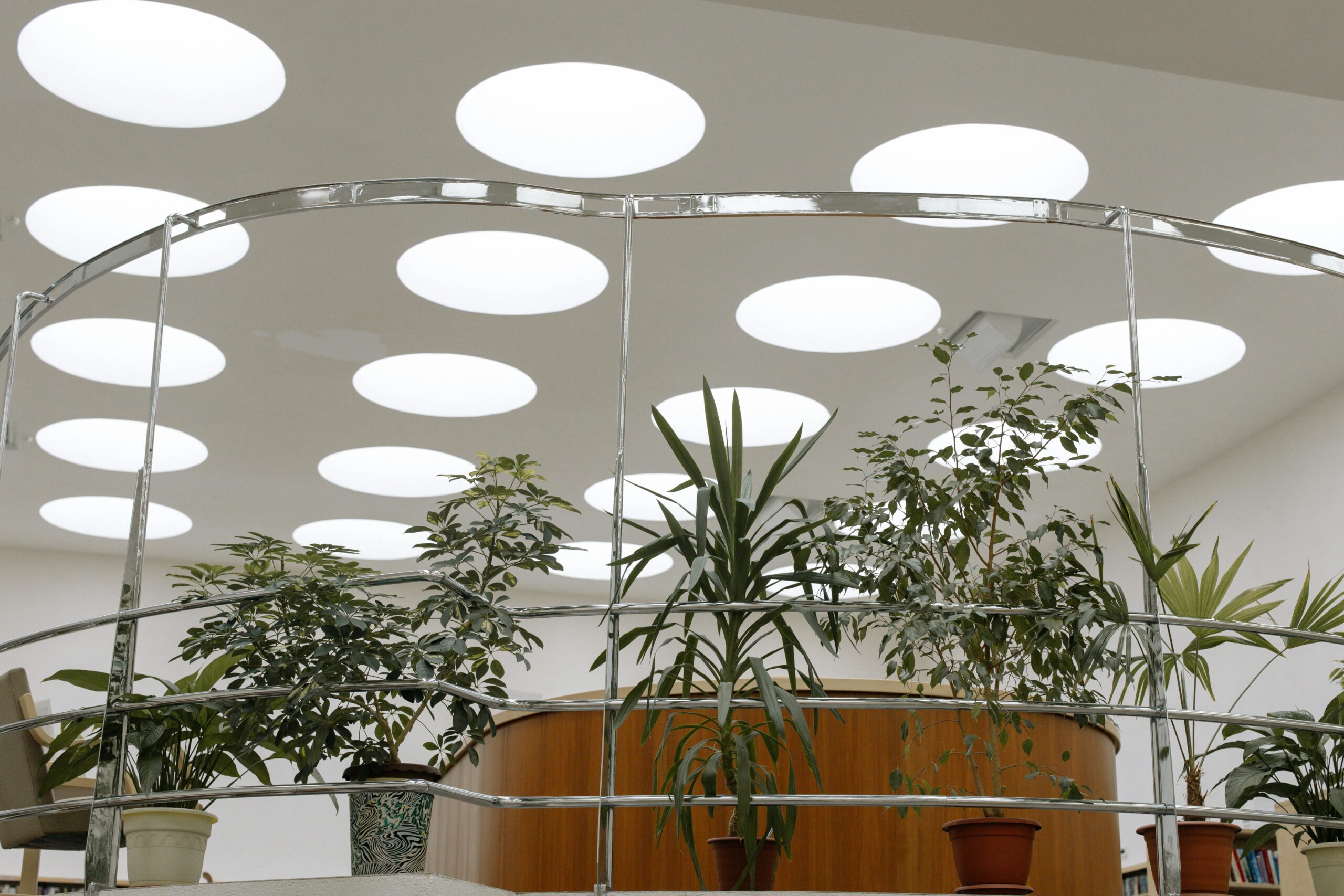
Transforming Your Remote Work Experience From the Ground Up
Implementing biophilic design principles fundamentally changes how you experience remote work. Rather than viewing your home office as a compromise—a domestic space awkwardly retrofitted for professional purposes—biophilic design creates an environment that actively supports both productivity and wellbeing. The natural elements surrounding you reduce stress, support concentration, boost creativity, and maintain the sensory richness that pure digital work environments lack.
Your biophilic workspace becomes more than simply where you work—it becomes a daily wellness practice. Each time you water plants, adjust blinds to optimize natural light, or pause to observe shadows moving across natural textures, you reinforce your connection to natural rhythms and cycles. This connection provides ballast against the disorienting timelessness of digital work, where days can blur together without meaningful distinction.
The investment in biophilic workspace design—whether measured in time, money, or attention—returns dividends in sustained productivity, reduced burnout, and genuine enjoyment of your work environment. As remote work continues evolving from emergency measure to permanent arrangement for millions of professionals, creating workspaces that truly support human flourishing becomes not just valuable but essential. Nature has always provided what humans need to thrive; biophilic design simply brings those benefits indoors, where remote workers spend most of their days. 🌿
