
Anúncios
Air travel has undergone a remarkable transformation, with sustainability now at the forefront of aviation innovation and passenger decision-making processes worldwide.
✈️ The Green Revolution in Aviation Classes
The aviation industry stands at a critical juncture where environmental responsibility meets passenger comfort. As climate consciousness rises globally, airlines are reimagining their cabin classes to reduce carbon footprints while maintaining exceptional service standards. Understanding the sustainability features across different flight classes empowers travelers to make informed choices that align with their environmental values without sacrificing comfort.
Anúncios
Modern air travel presents a complex equation: balancing personal comfort preferences with environmental impact. Each cabin class carries distinct carbon implications, from seat pitch to meal service, amenities packaging, and overall resource consumption. The journey toward sustainable aviation requires examining these nuances across economy, premium economy, business, and first-class offerings.
Understanding Carbon Footprint by Cabin Class
The carbon footprint associated with air travel varies significantly depending on your chosen cabin class. This variance stems primarily from space allocation—premium cabins occupy more aircraft real estate per passenger, effectively increasing individual carbon emissions. A first-class passenger may generate up to nine times the carbon footprint of an economy traveler on the same route, according to environmental aviation studies.
Anúncios
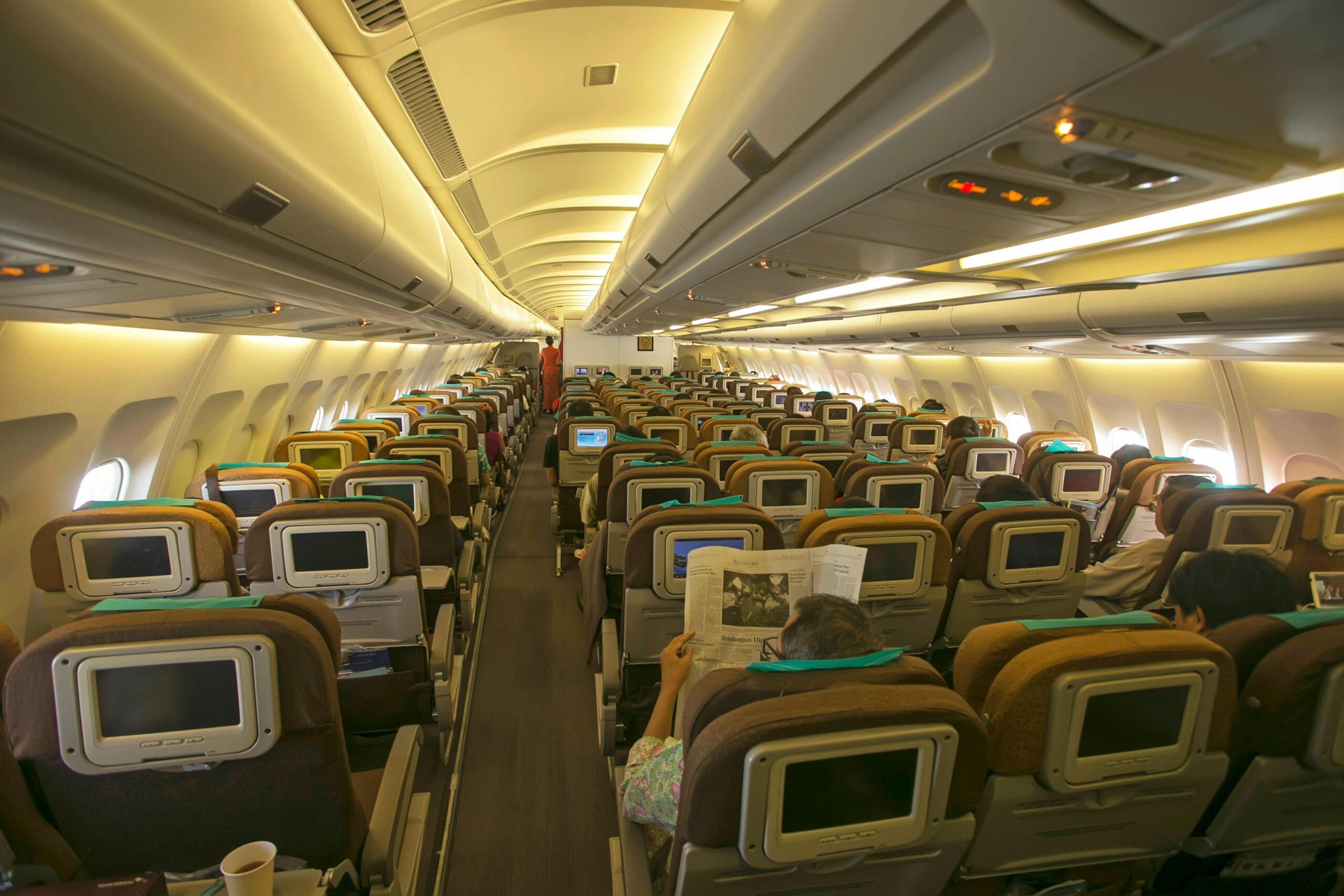
Economy class remains the most sustainable flying option from a pure emissions perspective. The compact seating configuration maximizes passenger density, distributing the flight’s total emissions across more individuals. However, this mathematical advantage doesn’t tell the complete sustainability story, as airlines increasingly implement eco-friendly practices across all cabin classes.
Business and first-class passengers contribute disproportionately to aviation emissions due to larger seats, additional amenities, and lower passenger-to-space ratios. A typical business class seat occupies approximately three times the space of an economy seat, while first-class accommodations can claim five to eight times more area. This spatial reality directly translates to higher per-passenger emissions, creating an environmental consideration for conscious travelers.
🌱 Sustainable Innovations in Economy Class
Airlines have transformed economy class into a sustainability laboratory where innovative practices reach the maximum number of passengers. Leading carriers now prioritize lightweight materials in seat construction, reducing overall aircraft weight and fuel consumption. These engineering advances deliver measurable environmental benefits while maintaining passenger comfort and safety standards.
Digital transformation has revolutionized economy service sustainability. Electronic boarding passes, in-flight entertainment apps, and digital meal pre-ordering eliminate countless tons of paper waste annually. Progressive airlines encourage passengers to download their mobile applications before flights, streamlining operations while reducing material consumption.
Meal service represents another sustainability frontier in economy class. Airlines increasingly source locally-produced, seasonal ingredients for onboard catering, reducing transportation emissions and supporting regional agriculture. Plant-based meal options have expanded dramatically, reflecting both passenger demand and their lower environmental impact compared to animal-based alternatives.
Cabin amenity packaging has undergone significant green redesign. Single-use plastics are disappearing from economy service, replaced by biodegradable or reusable alternatives. Forward-thinking carriers provide amenity kits made from recycled materials, featuring products from environmentally-certified suppliers. These seemingly small changes accumulate into substantial environmental benefits across millions of annual flights.
Premium Economy: The Sustainable Middle Ground
Premium economy has emerged as an interesting compromise between comfort and environmental consciousness. This cabin class offers enhanced legroom, improved meal service, and superior amenities while maintaining better passenger density than business or first class. The sustainability equation becomes more favorable than traditional premium cabins, though not quite matching economy’s efficiency.
Airlines designing premium economy sections often incorporate sustainable materials more extensively than in other cabins. Recycled fabrics, eco-friendly leather alternatives, and responsibly-sourced wood accents appear frequently in premium economy seats. These material choices reflect growing awareness among mid-tier passengers who value both comfort and environmental responsibility.
The service model in premium economy naturally reduces waste compared to business class. Meal presentations, while elevated above economy standards, avoid the excessive packaging common in business dining. Airlines typically offer ceramic dishware and metal cutlery, eliminating disposable alternatives while maintaining an upscale experience.
♻️ Business Class Sustainability Initiatives
Business class presents unique sustainability challenges due to its premium positioning and space requirements. However, innovative airlines are proving that luxury and environmental responsibility can coexist. Modern business class cabins feature seats constructed from recycled materials, including ocean plastics and reclaimed aircraft aluminum, demonstrating that premium experiences need not compromise planetary health.
The bedding and amenity programs in business class have undergone green transformations. Airlines partner with eco-certified suppliers to provide organic cotton bedding, bamboo-fiber pajamas, and natural skincare products. These premium touches satisfy discerning travelers while significantly reducing environmental impact compared to conventional alternatives.
Meal service innovations shine particularly bright in business class, where culinary standards allow for creative sustainability initiatives. Leading carriers collaborate with celebrity chefs to design plant-forward menus that rival traditional offerings in taste and presentation. Wine selections increasingly feature organic and biodynamic producers, appealing to sophisticated palates while supporting sustainable viticulture.
Technology integration reduces waste throughout the business class experience. Personal device connectivity eliminates the need for disposable headphones and entertainment system peripherals. Digital newspapers and magazines replace physical publications, saving countless trees while providing passengers with broader content access.
First Class: Redefining Luxury Through Sustainability
First class represents aviation’s ultimate luxury tier, traditionally associated with maximum resource consumption. However, pioneering airlines are reimagining first class as a showcase for sustainable luxury, proving that environmental responsibility can coexist with uncompromising comfort and service excellence.
Suite construction in modern first class increasingly features sustainable materials without sacrificing aesthetic appeal or functionality. Responsibly-sourced hardwoods, recycled metals, and innovative bio-based plastics create stunning environments that minimize environmental impact. These design choices challenge the outdated notion that sustainability requires aesthetic compromise.
Amenity programs in first class lead industry sustainability innovation. Luxury collaborations with environmentally-conscious brands provide passengers with premium products featuring organic ingredients, sustainable packaging, and ethical production practices. These partnerships demonstrate that exclusivity and environmental responsibility represent complementary rather than conflicting values.
Despite occupying significant aircraft space, some first-class passengers actively carbon-offset their flights through airline programs or independent organizations. This consciousness among premium travelers drives industry-wide improvements, as airlines recognize that their most valued customers increasingly prioritize sustainability alongside traditional luxury markers.
🌍 Comparing Carbon Offsetting Programs Across Classes
Carbon offsetting has become a critical tool for environmentally-conscious travelers seeking to neutralize their flight emissions. Many airlines now offer integrated offsetting programs during booking, allowing passengers to calculate and compensate for their journey’s carbon footprint. These programs fund renewable energy projects, reforestation initiatives, and community-based environmental programs worldwide.
The offsetting cost varies significantly by cabin class, reflecting the different emission profiles discussed earlier. Economy passengers might offset a transcontinental flight for ten to twenty dollars, while business class offsets could reach fifty to one hundred dollars, and first-class offsetting might exceed two hundred dollars for long-haul routes.
Progressive airlines are incorporating offsetting more systematically into their operations. Some carriers automatically include carbon offsets in premium cabin fares, eliminating passenger decision fatigue while demonstrating corporate environmental commitment. This approach normalizes offsetting as a standard travel component rather than an optional extra.
Third-party offsetting programs provide alternatives for passengers seeking additional assurance or specific project support. Organizations like Gold Standard and Verified Carbon Standard certify high-quality offset projects, ensuring that passenger contributions generate genuine environmental benefits. Savvy travelers often research these options before booking flights, integrating offsetting into their overall travel sustainability strategy.
Fleet Modernization and Cabin Class Efficiency
Aircraft technology advances dramatically impact the sustainability profile of all cabin classes. New-generation aircraft like the Airbus A350 and Boeing 787 Dreamliner consume up to 25% less fuel than predecessors, reducing emissions across all seating categories. These efficiency gains benefit the environment regardless of passenger cabin choice, though the per-passenger impact remains class-dependent.
Airlines prioritizing fleet modernization demonstrate tangible sustainability commitment beyond marketing rhetoric. Newer aircraft feature improved aerodynamics, lightweight composite materials, and efficient engines that collectively slash environmental impact. Passengers can research airline fleet ages and renewal plans, choosing carriers investing actively in technological advancement.
Cabin configurations in modern aircraft optimize space utilization without compromising comfort standards. Innovative seat designs maximize passenger capacity in economy while maintaining ergonomic support. Premium cabins benefit from intelligent layouts that reduce wasted space, improving overall aircraft efficiency and sustainability performance.
📊 Sustainable Service Standards Comparison
Service delivery methods significantly influence the sustainability profile of different cabin classes. Economy service efficiency naturally generates less waste through streamlined meal service and limited amenity distribution. However, quality need not suffer—airlines prove daily that efficient service can satisfy passengers while minimizing environmental impact.
Premium cabins face greater sustainability challenges due to elaborate service rituals and extensive amenity offerings. Forward-thinking carriers address this through careful sourcing, reusable serviceware, and thoughtful presentation that impresses passengers without generating excessive waste. The key lies in intelligent design that values quality over quantity.
Beverage service across all classes increasingly features sustainable options. Organic wines, fair-trade coffees, and locally-produced spirits replace conventional alternatives, delivering superior taste while supporting ethical production. These choices resonate with passengers who view their consumption decisions as expressions of personal values.
Making Informed Sustainable Flight Choices
Selecting the most sustainable cabin class requires balancing multiple factors beyond simple carbon calculations. Personal circumstances, flight length, health considerations, and budget all influence optimal choices. A business traveler requiring rest before important meetings might justifiably choose business class while offsetting emissions and supporting sustainable airlines.
Research capabilities empower travelers to compare airline sustainability credentials systematically. Corporate environmental reports, independent ratings from organizations like Atmosfair, and passenger reviews provide valuable insights into carrier commitment levels. This information helps travelers align flight selections with personal environmental values.
Frequency considerations matter significantly in personal aviation sustainability profiles. Occasional flyers might reasonably choose any cabin class while offsetting emissions, whereas frequent travelers should carefully consider their cumulative impact. Some business travelers adopt policies of flying economy for shorter routes while reserving premium cabins for genuinely long-haul journeys.
🌟 The Future of Sustainable Aviation Classes
Aviation sustainability continues evolving rapidly, with promising innovations emerging across all cabin classes. Sustainable aviation fuels (SAF) represent a game-changing technology, reducing lifecycle emissions by up to 80% compared to conventional jet fuel. As SAF production scales and costs decline, all passengers will benefit from dramatically reduced flight emissions regardless of cabin choice.
Electric and hydrogen propulsion technologies promise eventual zero-emission flights for shorter routes. While currently limited to small aircraft and brief ranges, these technologies will revolutionize regional aviation within the next decade. Early applications will likely feature single-class configurations prioritizing accessibility and sustainability over traditional class distinctions.
Cabin design continues advancing toward circular economy principles, where materials are continuously reused rather than discarded. Airlines are partnering with manufacturers to create modular cabin components that can be easily refurbished, upgraded, and ultimately recycled. This approach will transform sustainability across all cabin classes, making resource efficiency inherent rather than supplementary.
Passenger expectations are driving industry transformation perhaps more than any regulatory requirement. Travelers increasingly demand transparency about environmental impacts and meaningful sustainability initiatives. Airlines responding authentically to these expectations will thrive, while those offering mere greenwashing will face growing skepticism and business challenges.
Practical Steps for Eco-Conscious Air Travelers
Implementing sustainable flying practices requires no sacrifice in travel enjoyment or comfort. Start by researching airline environmental commitments, prioritizing carriers with concrete sustainability programs over vague claims. Many airlines publish detailed environmental reports outlining specific initiatives, targets, and progress measurements.
Pack thoughtfully to reduce onboard waste generation. Bring reusable water bottles, decline unnecessary amenities, and choose digital entertainment options over disposable alternatives. These individual actions collectively create significant environmental benefits when multiplied across millions of annual passengers.
Consider direct flights whenever possible, as takeoffs and landings generate disproportionate emissions compared to cruising altitude. A single direct flight produces substantially less carbon than connecting itineraries covering the same overall distance. This principle applies equally across all cabin classes.
Engage with airlines about sustainability priorities through feedback channels and social media. Carriers respond to customer preferences, and expressed environmental concerns influence corporate decision-making. Positive feedback for sustainable initiatives encourages their expansion, while constructive criticism can prompt improvements.
Your Journey Toward Sustainable Skies
Air travel sustainability represents a shared responsibility between airlines, passengers, regulators, and technology innovators. While cabin class selection impacts individual carbon footprints, the broader movement toward sustainable aviation depends on collective action and systemic change. Every conscious choice contributes to this transformation, from economy passengers declining plastic cutlery to first-class travelers demanding organic amenities.
The most sustainable flight is often the one not taken, but when air travel becomes necessary, informed choices matter. Understanding the environmental implications of different cabin classes empowers travelers to align their decisions with personal values. Whether flying economy for its efficiency, choosing premium economy as a middle ground, or offsetting business class emissions, conscious passengers drive industry improvement.
Aviation’s sustainable future depends on continued innovation, genuine commitment from industry leaders, and engaged passengers who demand better. The journey toward truly sustainable air travel has begun, with encouraging progress across all cabin classes. By making informed choices and supporting airlines pioneering environmental initiatives, travelers become active participants in aviation’s green transformation rather than passive contributors to environmental challenges.
